
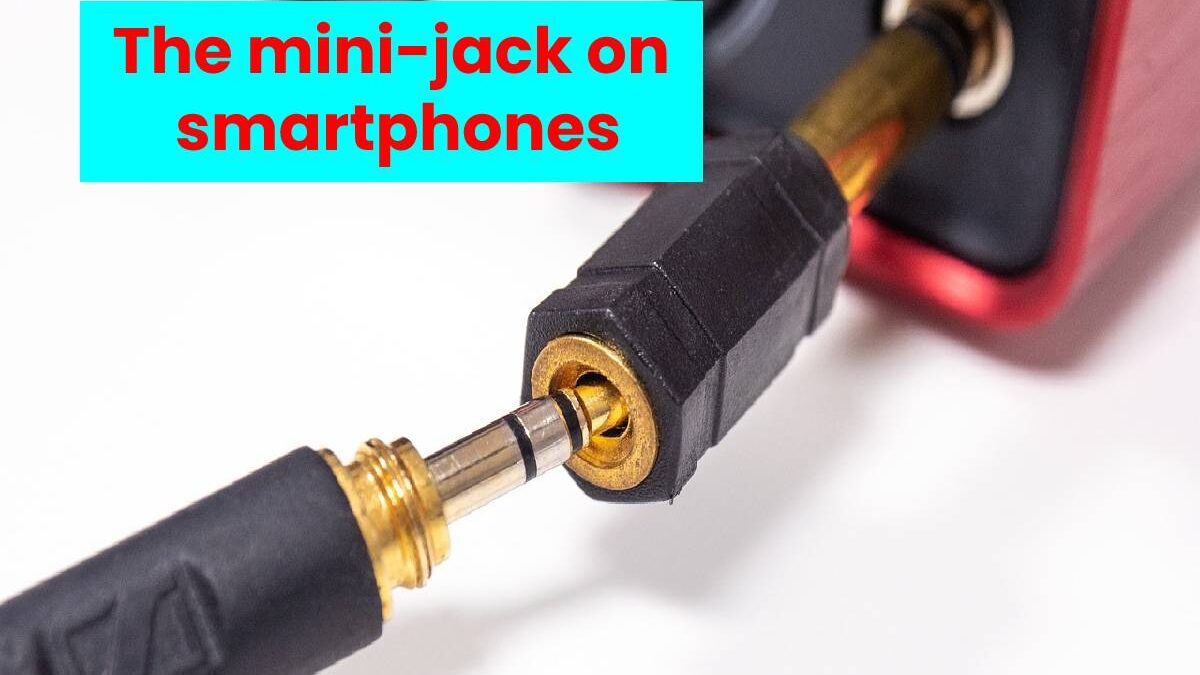
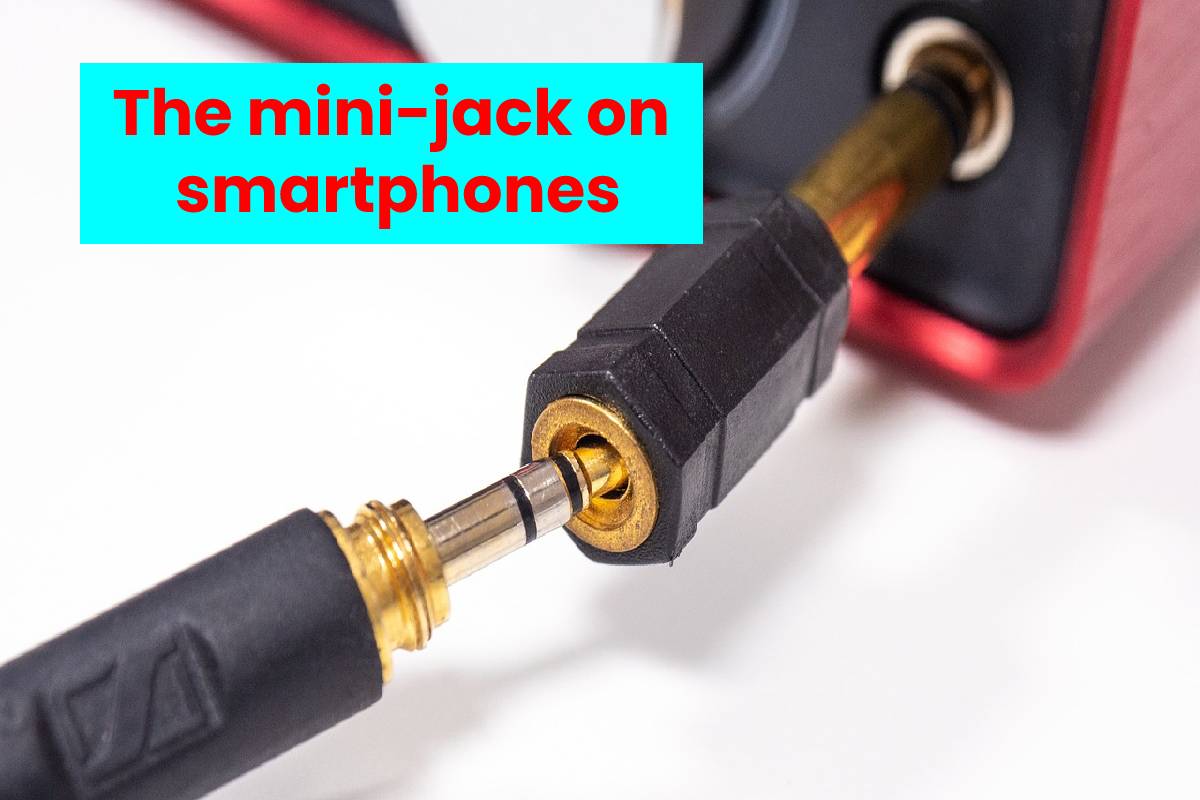
Since the issue of the iPhone 7 in 2016. The mini-jack port takes completely deserted the smartphones and tablets of the Cupertino company. A practice that made a lot of noise at the time and generated many criticisms of competing brands. However, the abandonment of this mini-jack output is commonplace today. The latest Android smartphones from Samsung or Sony are no exception, and the jack now leaves room for a single USB-C connector for charging and audio. At the current level, all smartphones and tablets on the market will soon be without mini-jack headphone output. So why do manufacturers abandon this universal connection in favour of a solo Lightning or USB-C port? What are the answers to continue listening to music with your smartphone or tablet? Here are some answers.
Audio connectivity is an important consideration when choosing a device for music, videos, and everyday entertainment. Tablets offer a larger screen for multimedia activities, making them useful companions for browsing and streaming. Explore the best uses of the iPad to learn more about how Apple’s tablet fits into everyday life.
Table of Contents
The jack connector, a 150-year history
Directly derived from the 6.35 mm jack socket designed at the end of the 19th century for telephone switchboards, the 3.5 mm mini-jack connector appeared in the 1960s. Sony was the first brand to install this connection on a consumer device with the portable radio Sony EFM-117J released in 1964. However, this new format will remain very little used until 1979, when Sony disrupts the world of nomadic listening with its first Walkman, the Sony TPS -L2. As a result, the 3.5mm mini-jack connector has established itself as a new standard for headphones, headsets, and mobile devices. It is thus quite natural that this connection remained used by the various manufacturers of smartphones and tablets. So why are brands suddenly trying to do away with this universal connection? How to use your wired headset on a smartphone without a jack port? This is what we are going to find out.
Smartphone manufacturers have adopted different approaches to audio connectivity, depending on their target markets, device designs, and hardware priorities. Readers interested in mobile devices from Japan can explore this guide to Japanese handphones for additional context on Japanese mobile technology.
Why is the mini-jack removed from smartphones?
According to the manufacturers, the main arguments favoring eliminating the mini-jack headphone output are better sealing, better tactile control, and the possibility of making thinner smartphones. More or less questionable statements. It should remain noted that removing the mini-jack on the iPhone 7 was accompanied by an extra thickness of 0.2 mm compared to the iPhone 6. One of the main reasons for abandoning this connection is to favour the development of wireless technologies.
Bluetooth headsets and headphones are now very successful and booming, so, logically, highly technological products such as smartphones adapt to the latest trends. This is mainly why the removal of the mini-jack 3, Apple Airpods. At Sony, the recent removal of the output mini-jack headphone on the Xperia 1 was also predictable given the rapid expansion of the range of Bluetooth headsets to true-wireless headphones and Bluetooth headsets of the Japanese manufacturer.
Smartphone audio features are just one factor to consider when comparing mobile devices. Hardware design, software capabilities, and camera performance can also influence a purchasing decision. For an example of Google’s smartphone lineup, read about the Google Pixel 3 and its key features.
Bluetooth headsets and headphones as a replacement for the mini-jack
Bluetooth audio transmission is now systematically integrated into smartphones and tablets, so it was logical that it would eventually take precedence over the mini-jack. However, one might think that abandoning a proven analogue connection favouring wireless technology represents a restriction in terms of audio quality. This is not the case, as the stability of Bluetooth transmission has improved dramatically over the generations, and the latest modules are both energy efficient and capable of high data rates. Therefore, it is possible to benefit from all the advantages of wireless systems while maintaining excellent audio quality. However, this requires choosing a headset and a smartphone allowing high Bluetooth speed. This can easily remain identified using the Bluetooth codecs used. The main ones are LDAC, aptX HD, aptX, AAC and SBC.
Currently, the best quality Bluetooth codec is Sony’s LDAC.
Its operation remains based on the Bluetooth 4.0 standard to transmit music wirelessly in CD quality (16 bit / 44.1 kHz). It is even possible to transmit records up to 24 bits / 96 kHz, with minimal compression and very little loss. Long remained the exclusive technology of the Japanese brand, LDAC has remained integrated by other brands for a few years. Thus, it remains found on many headsets such as the Technics F70, Technics F50 and Sony WH-1000XM3, and sure headphones such as the Sony WI-H700 and Sony WI-1000X neck loops.
Just below the LDAC are the aptX and aptX HD codecs. They offer a speed of around 576 Kbits for aptX HD and 350 Kbits for aptX. The sound compression method is deteriorating (information is deleted), but the restitution remains very good and allows listening very close to the CD for aptX HD. These codecs remain now integrated into the vast majority of Android smartphones and many mobile systems. This is particularly the case with the true wireless Klipsch T5 True Wireless and Sennheiser Momentum True Wireless headphones, the Focal Sphear Wireless Bluetooth headphones , RHA MA650 Wireless and Kef Motion One , as well as the Focal Listen Wireless headphones., Sony WH-1000XM3 and Grado GW100 .
If you have an iPhone or iPad, unfortunately, you will not benefit since the LDAC and aptX codecs. Apple has chose for AAC audio compression, which is also the format chosen for Apple Music. AAC remains generally implemented by all manufacturers of Bluetooth headsets and headphones. If this is not the case, then the communication takes place in SBC. The integration of this codec is mandatory for the manufacturers.
Cables and adapters replacing the mini-jack
A few manufacturers of headphones and earphones quickly adapted to eliminating the mini-jack plug by adjusting their cables for Lightning and USB-C formats. This is particularly the case with all Shure headphones with a detachable MMCX cable ( Shure SE215, Shure SE425, Shure SE535 and Shure SE846). The American manufacturer offers an MMCX to Lightning cable ( Shure RMCE-LTG ), an MMCX to USB-C cable ( Shure RMCE-USB-C) and even a Bluetooth MMCX adapter ( Shure RMCE -BT2 ). Owners of old headphones can thus continue to use their wired. Bluetooth headphones on a smartphone without a jack plug.
Manufacturers offering Lightning and USB-C cables remain still very rare, however. So how do you use Hi-Fi headphones or wired headphones on a smartphone without a jack? Several solutions exist. The first is to use a simple Lightning mini-jack or USB-C mini-jack adapter. These adapters remained generally supplied with smartphones or tablets, but unfortunately, less and less the case. In addition, the quality of the conductive materials used is often not optimal. This type of adapter will therefore remain preferred for entry-level headphones or earphones.
Portable DACs as a replacement for the mini-jack
If you have wired headphones or earphones and want to enjoy audiophile-quality listening. The best solution for plugging your headphones into a device without a jack is to use a portable audio DAC. These tiny devices connect to the smartphone’s USB-C or Lightning port to support audio signal conversion. There are many models of portable DACs. Some have a built-in battery. A USB port to connect them to a computer, while others are no bigger than a simple adapter.
Using a DAC as an alternative to a smartphone jack is also a solution to improve audio quality. Indeed, the converters used by external DACs being significantly more efficient than the models embedded in smartphones. Entrusting the decoding of an audio file or a streamed music stream to an external DAC then transforms listening. It is possible to listen to FLAC and PCM files with a very high sampling rate from any iOS or Android smartphone. Without this DAC, reading these files would be impossible with the vast majority of smartphones.
Headphone outputs from smartphones or tablets are often associated with poor quality amps, with considerable distortion, especially at low frequencies. Therefore, using a portable audio DAC has a second advantage, that of bypassing the smartphone amplifier. All portable DACs remain consequently equipped with a headphone amplifier with at least one 3.5 mm mini-jack output. The amps used generally have an excellent quality output stage for better-balanced listening and more intensity. The amplification power is also more generous. Making it possible to associate a high-impedance or low-sensitivity Hi-Fi headset with his smartphone. Finally, some portable DACs also provide a balanced output.

Afiya Jafar
Afiya Jafar is a technology writer who focuses on making complex technology topics clear, practical, and easy to understand. Her work covers artificial intelligence, software, gadgets, cybersecurity, cloud computing, internet technologies, mobile technology, digital tools, and emerging technology trends.
View Author Profile →
Sameena Begum
Sameena Begum is a health, technology, and digital content reviewer who reviews selected articles to help ensure that information is presented clearly, accurately, and responsibly.
View Reviewer Profile →